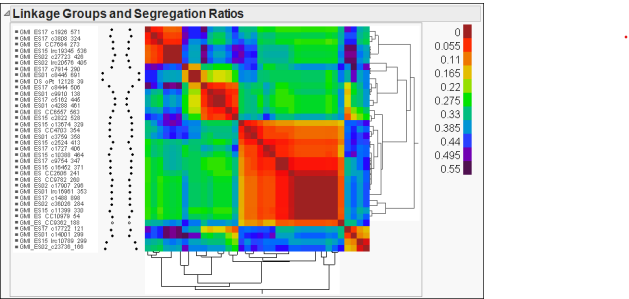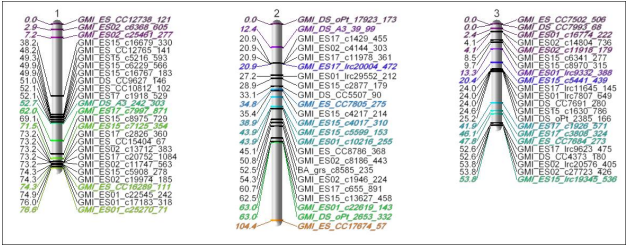
Biology becomes a search problem at scale.
Genetic mapping links biological structure with mathematical optimization. As marker counts grow, operations research techniques help navigate complex search spaces more efficiently.
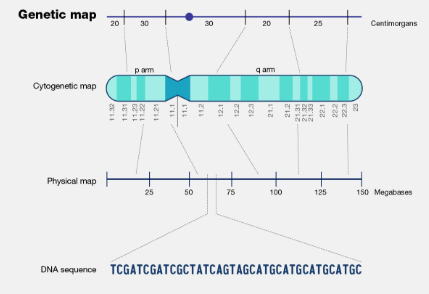
Where OR meets genetics.
The supplied material connects genetic mapping challenges with optimization tools such as heuristics, dimensionality reduction and constrained optimization.
Marker ordering
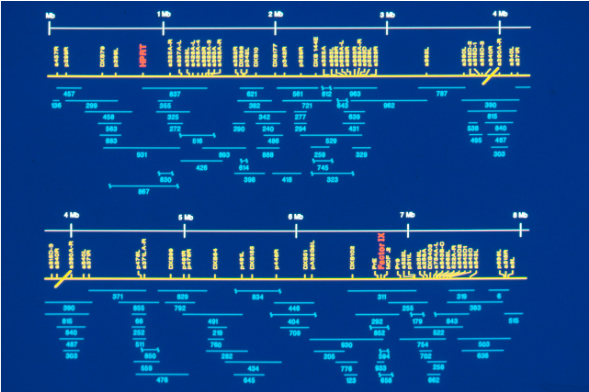
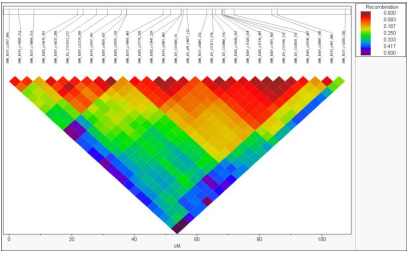
Physical marker order can be modeled as a variant of the Traveling Salesperson Problem using recombination frequencies as distances.
Epistasis detection
High-dimensional gene–gene interaction searches can be approached as feature-selection and dimensionality-reduction problems.
Breeding optimization
Multi-trait genetic gain can be framed using constrained resource allocation, knapsack and Pareto-optimization ideas.
Different genetic questions, different OR tools.
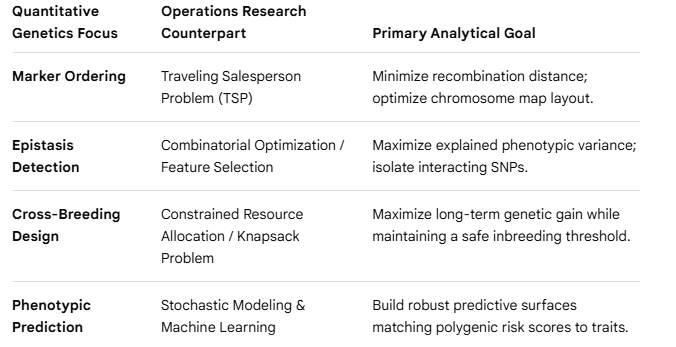
Several analytical frameworks in the source material can be viewed side by side.
| Quantitative genetics focus | Operations research counterpart | Primary analytical goal |
|---|---|---|
| Marker Ordering | Traveling Salesperson Problem (TSP) | Minimize recombination distance and optimize chromosome-map layout. |
| Epistasis Detection | Combinatorial Optimization / Feature Selection | Maximize explained phenotypic variance and isolate interacting SNPs. |
| Cross-Breeding Design | Constrained Resource Allocation / Knapsack Problem | Maximize long-term genetic gain while maintaining a safe inbreeding threshold. |
| Phenotypic Prediction | Stochastic Modeling & Machine Learning | Build robust predictive surfaces matching polygenic risk scores to traits. |
Prune the search space instead of brute-forcing it.
The supplied document describes approaches including Integer Linear Programming, regularized regression penalties such as LASSO/Elastic Net, and deterministic branch-and-bound methods to reduce non-significant genomic pathways.